Monday, June 15, 2009

CMO shipping 3D panels to Wistron for HP notebooks (To Hit Market Last Half of 2009) DIGITIMES [Monday 15 June 2009]

CMO shipping 3D panels to Wistron for HP notebooks     

Max Wang, Taipei; Yvonne Yu,
DIGITIMES [Monday 15 June 2009]


Chi Mei Optoelectronics (CMO) has completed the development of a 18.4-inch 3D notebook panel, which has been adopted by Wistron
for notebook shipments to Hewlett Packard (HP), according to market sources.

The HP notebooks featuring CMO's 18.4-inch 3D panels are expected to hit the market in the second half of 2009, the sources noted.

CMO indicated that the notebook panel has full HD resolution with 120Hz frame rate.

For CULV notebooks, CMO also has introduced several ultra-thin panels, including 11.6-, 14-, and 15.6-inch, the sources added.


More than 10% of US and Japanese households will be '3D enabled' by 2012, Western Europe not far behind

DIGITAL HOME DESIGN LINE
http://www.digitalhomedesignline.com/217300430;jsessionid=HFY5NZHHBDZ2KQSNDLOSKH0CJUNN2JVN?printableArticle=true

May 06, 2009

More than 10% of US and Japanese households will be '3D enabled' by
2012, Western Europe not far behind

By Gregory Quirk

Now more than ever 3D is coming to the fore, with backing from all
major sectors of the entertainment and consumer electronics
industries. 3D movie production is intensifying, cinemas all over the
world are investing in 3D technologies and feedback from audiences has
been highly positive, with encouraging ticket sales. Yet the ultimate
goal is to bring 3D to the home.

"Consumers are starting to experience the new wave of 3D technologies
at the cinema and through Digital Out of Home advertising, and it
won't be long before there's a groundswell of demand for 3D within the
home," says Sarah Carroll, Director of Continuous Services,
Futuresource Consulting. "With over 200 million new TVs sold across
the globe every year, the potential is huge, but the industry needs to
overcome some serious obstacles in order to kick start and fully
realise the revenue streams.

"Most notably, technical and standards issues still need to be
resolved and there is a limited supply of 3D content, with the current
economic climate making new investment in production and distribution
a challenge, particularly for the broadcast industry. That said, there
is a real feeling of excitement surrounding 3D and here at
Futuresource we believe this will translate into commercial success
within the next three to five years."

All eyes will be on the consumer electronics industry, with '3D Ready'
TVs a prerequisite to consumer adoption in much the same way as
'HD-Ready' sets were used to seed the high definition market five
years ago. An early decision on the Blu-ray 3D standard will also be
critical, as packaged media will be necessary to help drive the
market.

"Custom chipsets can be embedded into next gen hardware at relatively
low cost," says Carroll. "Combine this with an integrated consumer
awareness programme and a coherent '3D-Ready' branding strategy, and
the resulting price premium on hardware will more than offset the
additional manufacturing costs."

"Our analysis points to the emergence of two distinct phases as we
move through the diffusion curve," says Jim Bottoms, Managing Director
of Corporate Development at Futuresource. "Currently, we're easing
into the preparatory phase, which will stretch out to 2011. Here we'll
see 3D movies primarily being made for theatrical release and the
continued rollout of 3D digital cinema. TV manufacturers will start to
roll out multi-format '3D-Ready' sets and glasses from 2010, VoD
delivery systems will begin to include limited 3D movie, concert and
sport content, and the market for 3D PC games will continue to
develop.

"Our probability modelling shows the permeation phase will kick in
from 2011, where - among other initiatives - we'll see new 3D movie
releases on Blu-ray, remasters of classic blockbusters like Star Wars,
The Matrix and The Lord of the Rings, a wider range of 3D TV content
for sports, wildlife documentaries and concerts, and studios
introducing selective production of 3D TV shows and series. By 2012,
more than 10% of US and Japanese homes will be '3D enabled', and
Western Europe won't be too far behind, with 6% household penetration.
Moving forward, a new generation of videogame consoles will begin to
emerge, fully embracing 3D technologies, and in the long term we'll
see the industry shift to autostereoscopic (no glasses) displays."


May 06, 2009

More than 10% of US and Japanese households will be '3D enabled' by
2012, Western Europe not far behind

By Gregory Quirk

Now more than ever 3D is coming to the fore, with backing from all
major sectors of the entertainment and consumer electronics
industries. 3D movie production is intensifying, cinemas all over the
world are investing in 3D technologies and feedback from audiences has
been highly positive, with encouraging ticket sales. Yet the ultimate
goal is to bring 3D to the home.

"Consumers are starting to experience the new wave of 3D technologies
at the cinema and through Digital Out of Home advertising, and it
won't be long before there's a groundswell of demand for 3D within the
home," says Sarah Carroll, Director of Continuous Services,
Futuresource Consulting. "With over 200 million new TVs sold across
the globe every year, the potential is huge, but the industry needs to
overcome some serious obstacles in order to kick start and fully
realise the revenue streams.

"Most notably, technical and standards issues still need to be
resolved and there is a limited supply of 3D content, with the current
economic climate making new investment in production and distribution
a challenge, particularly for the broadcast industry. That said, there
is a real feeling of excitement surrounding 3D and here at
Futuresource we believe this will translate into commercial success
within the next three to five years."

All eyes will be on the consumer electronics industry, with '3D Ready'
TVs a prerequisite to consumer adoption in much the same way as
'HD-Ready' sets were used to seed the high definition market five
years ago. An early decision on the Blu-ray 3D standard will also be
critical, as packaged media will be necessary to help drive the
market.

"Custom chipsets can be embedded into next gen hardware at relatively
low cost," says Carroll. "Combine this with an integrated consumer
awareness programme and a coherent '3D-Ready' branding strategy, and
the resulting price premium on hardware will more than offset the
additional manufacturing costs."

"Our analysis points to the emergence of two distinct phases as we
move through the diffusion curve," says Jim Bottoms, Managing Director
of Corporate Development at Futuresource. "Currently, we're easing
into the preparatory phase, which will stretch out to 2011. Here we'll
see 3D movies primarily being made for theatrical release and the
continued rollout of 3D digital cinema. TV manufacturers will start to
roll out multi-format '3D-Ready' sets and glasses from 2010, VoD
delivery systems will begin to include limited 3D movie, concert and
sport content, and the market for 3D PC games will continue to
develop.

"Our probability modelling shows the permeation phase will kick in
from 2011, where - among other initiatives - we'll see new 3D movie
releases on Blu-ray, remasters of classic blockbusters like Star Wars,
The Matrix and The Lord of the Rings, a wider range of 3D TV content
for sports, wildlife documentaries and concerts, and studios
introducing selective production of 3D TV shows and series. By 2012,
more than 10% of US and Japanese homes will be '3D enabled', and
Western Europe won't be too far behind, with 6% household penetration.
Moving forward, a new generation of videogame consoles will begin to
emerge, fully embracing 3D technologies, and in the long term we'll
see the industry shift to autostereoscopic (no glasses) displays."

3D Screens Now Number Over 5,000 Worldwide - PR WEB - Digdia - June 15, 2009

3D Screens Now Number Over 5,000 Worldwide

New DIGDIA report examines the why, how and opportunities of Digital
3D Entertainment from the theater to the home.

Cupertino, California (PRWEB) June 15, 2009 -- Someone flipped a
switch on the topic of "3D" in 2009. In every industry from movie
production to consumer electronics, the subject of 3D has been a main
topic of discussion. Topics like Digital Cinema, Digital Cable and
HDTV have begun to settle down and forward thinkers are now wondering
what 3D means to their businesses.

While many people still wonder out loud if 3D is just a fad the way it
was in the past, a growing number of people are well beyond this
controversy - and they are putting their money where their mouth is.
Investments are being made all across the board.

One piece of evidence - there are now over 5,000 digital 3D screens
worldwide. And, the companies that are installing 3D equipment in
theaters - RealD, XpanD, Dolby and Master Image - all report hundreds
of orders in their pipeline.

Another piece of evidence - there are over 30 digital 3D movie titles
in the works for 2010. There haven't been this many 3D titles since
the so-called "golden age of 3D" in the early 1950s. But, back then
viewers had to suffer from primitive technology and pictures that gave
people headaches. Furthermore, directors used cheap "stick in your
eye" 3D tricks to show off the fact that the movie was in 3D.

The movie industry has learned their lessons and things have changed.
3D is now based on digital 3D technology, which uses new digital
cinema projection systems. Digital 3D is rock solid and produces
images that can truly make you feel you are there. Directors have
learned not to over use 3D gimmicks and people in postproduction make
better images that won't give viewers a headache.

The most significant change is that theaters and studios figured out
that digital 3D means more money. As such, digital 3D titles now
include mainstream movies like UP from Pixar/Disney that proved good
enough to open the Cannes film festival.

Now the rest of the digital entertainment value chain is taking
notice. There are at least 16 standards, coordinating organizations
and national research labs working on bringing 3D to the home. Many
consumers may not know it, but many new digital televisions are
already "3D ready".

There are a few issues to deal with before digital 3D becomes a big
market. One does not simply glue a second camera to the tripod and
call it a day. Technical and product challenges exist everywhere still
as the industries grapple with the subtle issues that digital 3D
exposes. The fact that these challenges exist is good news for
companies that want to get on the ground floor on some new
opportunities.

A new market analysis report from DIGDIA takes a look at digital 3D
entertainment in detail. The report called Digital 3D Entertainment -
From Theater to Home, Why, How and Opportunities covers the market,
technologies, products, issues and opportunities. A free excerpt can
be downloaded at www.digdia.com.

About DIGDIA - digdia helps companies find growth opportunities,
create winning strategies and business plans for companies in the
digital entertainment value chain. Services include strategic
consulting and market analysis with a balanced business & technical
perspective. Topics covered include Digital Cinema, Digital Cable,
Digital Home, Digital Consumer Electronics and Services.

Sunday, June 14, 2009

Mitsubishi Banks on 3D, Laser and Better TV Sound - http://www.dealerscope.com

Saturday, June 13, 2009

3D Video Game - Cameron's game-changer? 'Avatar' looks to alter Hollywood videogame biz

Variety.com
Click here to find out more!

http://www.variety.com/index.asp?layout=print_story&articleid=VR1118004911&categoryid=13


Posted: Fri., Jun. 12, 2009, 4:24pm PT

Cameron's game-changer?

'Avatar' looks to alter Hollywood videogame biz

The track record of film-based videogames has been spotty. While there have been a handful of critical and commercial successes, the majority have been average at best -- and, frequently, embarrassing.

James Cameron plans to change that. Fox has scheduled a December release of his 3-D film "Avatar" and the filmmaker has pushed game publisher Ubisoft to create the vidgame industry's first stereoscopic title.

What's more, Cameron was so impressed by some of the shots developed by Ubisoft Digital Arts, a computer animation studio owned by the game publisher, that he will use some of them in the film.

Admittedly, these are small steps, but they signify a game-changing alliance with a multibillion-dollar industry, as Hollywood and gamemakers begin to work more closely.

And while few gamers -- or anyone else for that matter -- have a TV that will support the spectroscopic feature, a non-3-D version of the "Avatar" game also will be sold, and will bear Cameron's mark of approval. What's more, the 3-D game plants the seed for the Holy Grail of creating stereo 3-D at home in much the same way Cameron's commitment-obsession to 3-D film is being eyed as a significant step in even wider use of the format.

Ubisoft doesn't plan to end its association with high-powered directors after "Avatar" ships. The company announced at tech confab E3 in Los Angeles this month that it would work with Steven Spielberg and Kathleen Kennedy on a gaming adaptation of the upcoming "Tintin." The film marks a reteaming for the company with Peter Jackson, with whom Ubisoft worked on 2005's "King Kong," a launch title for the Xbox 360.

"We can create good games, but we are still very junior at creating movies, so why not join forces with the best of the best to make our visions come to life?" says Yves Guillemot, Ubisoft chairman-CEO, who co-founded the company in 1986.

Cameron and the company began work on the game version of "Avatar" 2½ years ago, an incredibly long gestation period for a film-based game. The long development window was deliberate to ensure the game would match the quality of the film, Cameron said during a surprise appearance at the E3 press conference for Ubisoft.

"Movies are on a one-year track," he said. "One year after someone pushes the button, it's in theaters. Good games can't be made that fast."

While affairs between studios and game publishers aren't always smooth, both sides say the "Avatar" relationship quickly became collaborative. As both sides contributed to each other's work, Cameron's passion for the project pushed Ubisoft to experiment with technologies that have never before been tried in the videogame space.

The partnership is part of Ubisoft's strategy to blend its game studios with filmmaking. Last July, the company bought Hybride Technologies, the visual effects house behind films such as "300" and "Sin City." Today, it uses Hybride to create new technologies for both films and games.

The plan behind the strategy, Guillemot says, is to lower expenses as it pushes new boundaries: "We need to make sure we can reuse our animations and graphics with other mediums, so we can reduce the cost of making games."

Both the film and game versions of "Avatar" are set in the 22nd century on Pandora, a large moon of a gas planet teeming with exotic new forms of life. Among the creatures who live there are the Na'vi, a humanoid race with blue skin, tiger stripes and heights of up to 10 feet. Humans cannot breathe the air on Pandora, but have created a living, genetic hybrid (known as an Avatar) into which they can insert their consciousness and explore the world.

Ubisoft was given full access to the film's CG shots to re-create the world. With Cameron's blessing, though, the game will tell a different story than the film, allowing it to be released at an earlier date.

"They brought the same passion to 'Avatar,' which is a licensed game, (that they bring to) their own games," Cameron said. "The world of the Avatar game is, in some ways, richer than what you'll see in the film. At the same time, it doesn't have any spoilers in it that will ruin the film for you."

The developers also had a few improvements they wanted to make to Pandora. Ubisoft came up with the idea of adding bioluminescence to the plant life. When he saw it, Cameron was so impressed, he added it to the film.

"Let's face it, some games based on movies have sucked," Cameron said at E3. "We had very ambitious goals for this film and we knew we wanted to choose our videogame partner very carefully."

Read the full article at:
http://www.variety.com/article/VR1118004911.html

Variety Digital Edition - "3-D reaches a tipping point in Europe - Once-skeptical exhibs and distribs flock to format" - VARIETY - June 12, 1009

Variety Digital Edition

http://www.variety.com/index.asp?layout=print_story&articleid=VR1118004886&categoryid=1009

Posted: Fri., Jun. 12, 2009, 2:17pm PT

3-D reaches a tipping point in Europe
Once-skeptical exhibs and distribs flock to format

By JOHN HOPEWELL
MADRID — Suddenly, but decisively, Europe is embracing 3-D. Opening with Pixar's "Up," Cannes underscored Europe's newfound 3-D faith.

"Cannes was the defining 3-D moment. It was all about 3-D," says Erik Jensen at Belgium's CDC United Network.

A dozen or more 3-D films, five of which hail from Europe, hit Cannes' market. At least 20 3-D indie pics, including pioneering Euro 3-D tooners "Holy Night!" from Spain's Dygra, and Pascal Herold's "Cinderella," are now in production.

And Cannes 3-D deals got done.

France's StudioCanal licensed "Around the World in 50 Years" worldwide. Nu Image sold "Dark Country" to France, Italy and Spain.

Italy's Eagle Pics bought "Sanctum" and "Around the World," having picked up "Ocean World" at Berlin. Even low-budget family picture "Call of the Wild" sold to several territories.

With the economics of 3-D now in place and the B.O. upside clearly demonstrated, and with Hollywood icons and Euro exhibitors trumpeting 3-D commitments, the format has gained critical mass.

For European exhibition, "The tipping point's December 2008 through February 2009," says David Hancock, head of cinema at research company Screen Digest. In December, Odeon/UCI, Europe's biggest theater loop with 1,600 screens, announced it would outfit another 70 venues, bringing its DCI-compliant total to 111 cinemas across Europe that have digital or full-fledged 3-D systems. (It has also committed to upgrade another 89 eventually).

"After Odeon's declaration, other exhibitors had to decide whether they were out or in with 3-D," Hancock comments.

They were in: From late January through February, big chains -- Britain's Cineworld and Vue Entertainment, Holland's Amsterdam Booking Co. -- made large 3-D announcements. France's Cineville followed in March, rival CGR in April.

Combined, the exhibitors' promised around 1,000 additional 3-D screens.

For distribs, the main game changer's been 3-D B.O. Odeon/UCI's Drew Kaza glows about 3-D grosses from "Chicken Little" to "Beowulf" and "Journey to the Center of the Earth." European distributors also cite a bevy of 3-D faith-forging B.O. milestones, most between October and Cannes. Released in October in Gaul, Ben Stassen's "Fly Me to the Moon" punched a $40,839 print average, doubling normal print figures, one Gallic distrib enthuses.

The 3-D explosion comes, crucially, amid the broader-picture downturn.

"The straight-to-DVD market is dead. Sales agents need to sell movies with clear theatrical potential. 3-D films are theatrical films by definition," argues Vicente Canales, head of international at Filmax, which received offers at Cannes from "nearly every major territory" for "Magic Journey to Africa."

European 3-D rollout is still patchy: Germany -- a forecast year-end 149 screens -- and Scandinavia are off the pace, though Svensk acquisitions head Robert Enmark hopes "Avatar" will boost Scandi exhibitor investment.

Already, though, the indie 3-D boom threatens a bust.

"I saw a lot of promos in 3-D. The successes will have to be good quality. It's going to be very hard to get the screens they need," Vairo says.

Read the full article at:
http://www.variety.com/article/VR1118004886.html

Monday, June 8, 2009

Acer to launch 3D notebook at the end of October,

DIGITIMES daily IT news
DIGITIMES online product demo


Acer to launch 3D notebook at the end of October, new netbook for 3Q10
Yen-Shyang Hwang, Taipei; Joseph Tsai, DIGITIMES [Monday 8 June 2009]

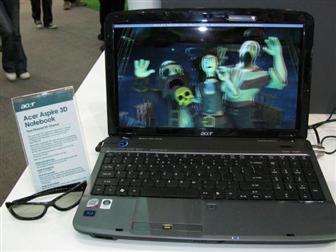
Acer plans to launch a 15.6-inch 3D notebook, which the company jointly developed with Wistron, at the end of October 2009, according to Campbell Kan, vice president of Acer's mobile computing business unit.

The notebook features built-in software which can convert regular 2D movies to 3D, and will also directly support 3D movies.

Currently, users still need to wear stereoscopic glasses for the 3D to be effective, however, Acer is developing a model without the need for glasses, although it still has quiet a few technological obstacles to overcome, Kan noted.

The notebook will come equipped with Windows 7 and therefore Acer will not make an official announcement until Microsoft launches the OS, Kan added.

In addition to Windows and Android models, Acer is also working on its third-generation netbook, which will feature a similar concept as MIDs or smartbooks with strong network connectivity and convenience, and it targeting a launch in the second of third quarter of 2010, Kan noted.

Acer 3D notebook

Acer 3D notebook
Photo: Yen-Shyang Hwang, Digitimes, June 2009

Related stories:

Acer Android netbooks will still ship with Windows, reveals chairman (Jun 5)

Computex 2009: Acer unveils ultra-thin business notebook (Jun 4)